When opposites attract
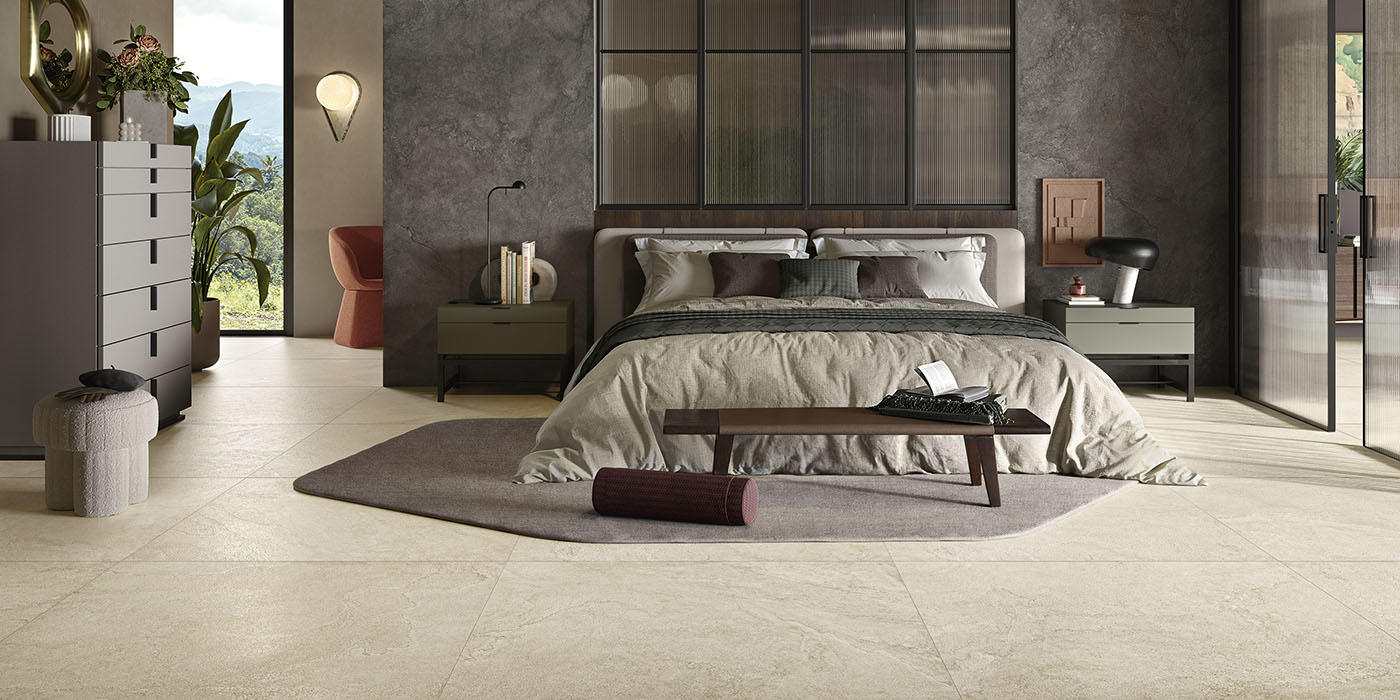
In contemporary design, opposites no longer exclude one another: they dialogue.
Aesthetic research moves increasingly between complementary tensions — deep surfaces and luminous tones, material strength and visual lightness, natural instinct and design rigour.
This is also why certain works continue to speak to the present with surprising relevance. A case in point is Wuthering Heights by Emily Brontë, now once again at the centre of the contemporary imagination: a story built on profound tensions, where nature and culture, shadow and light, impulse and balance coexist in an intense and unresolved relationship.
A sensibility that contemporary design interprets today through material, transforming contrast into a design tool capable of giving identity, atmosphere and depth to spaces.
The appeal of contrast in contemporary design
In contemporary design, harmony no longer means uniformity.
The most compelling spaces are those born from a relationship, from a continuous dialogue between different elements.
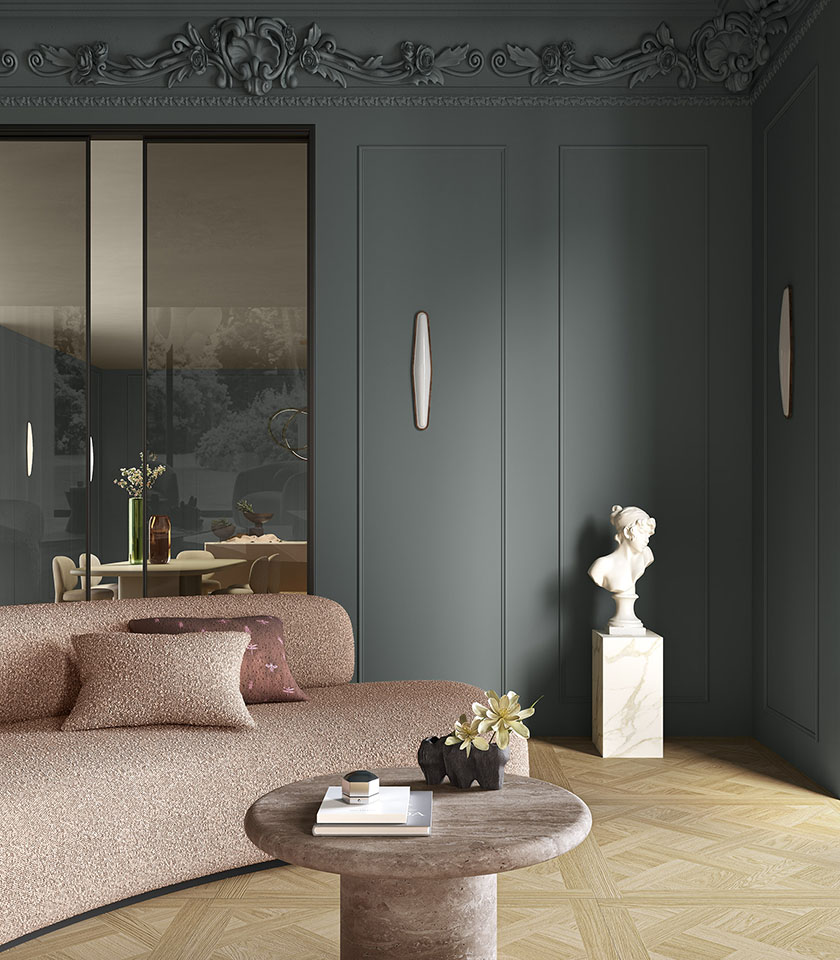
Deep surfaces sit alongside smoother finishes, intense colours meet luminous tones, structured materials open up to lighter textures. The design takes shape through this exchange.
Ceramic surfaces thus become true narrative instruments. Not simply cladding, but elements capable of building atmosphere and identity. Porcelain stoneware, with its ability to interpret material, allows different design languages to be explored while maintaining coherence and continuity.
The power of material: depth, character, presence
There is a dimension of design that echoes the earth, its primordial energy, its authentic imperfection.
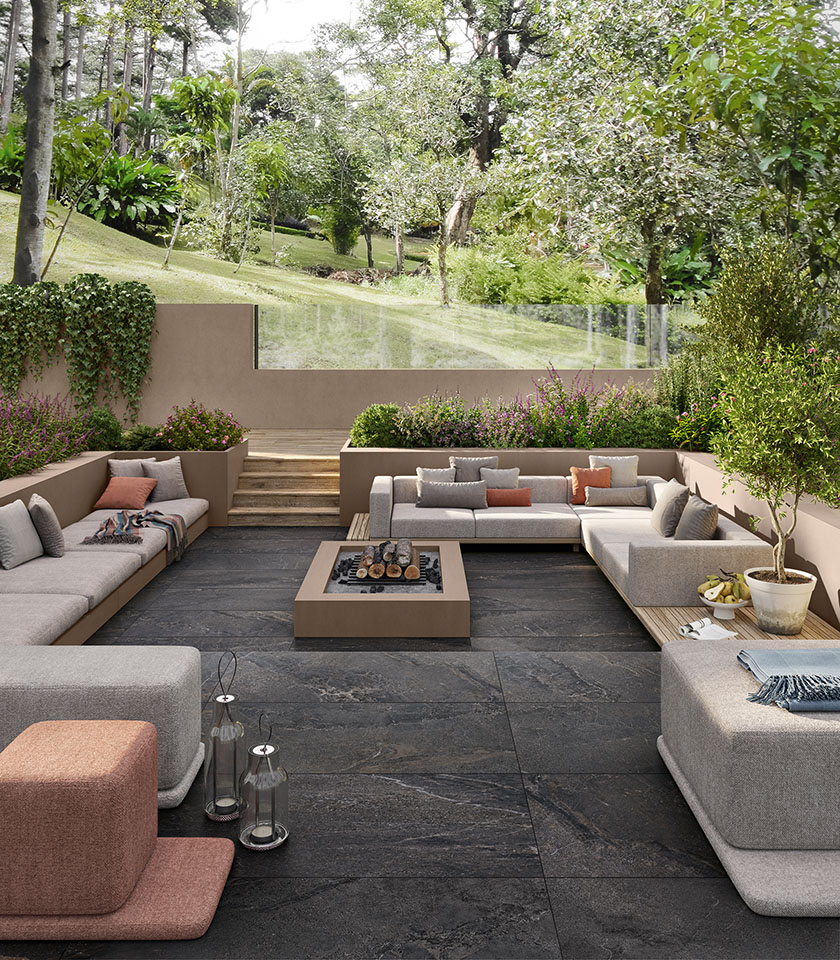
Collections such as Waterfall move in this direction, where the material seems to sediment itself into the space through surfaces rich in variations and depth. The more intense tones, such as Dark Flow, create environments with a bold, almost instinctive character.
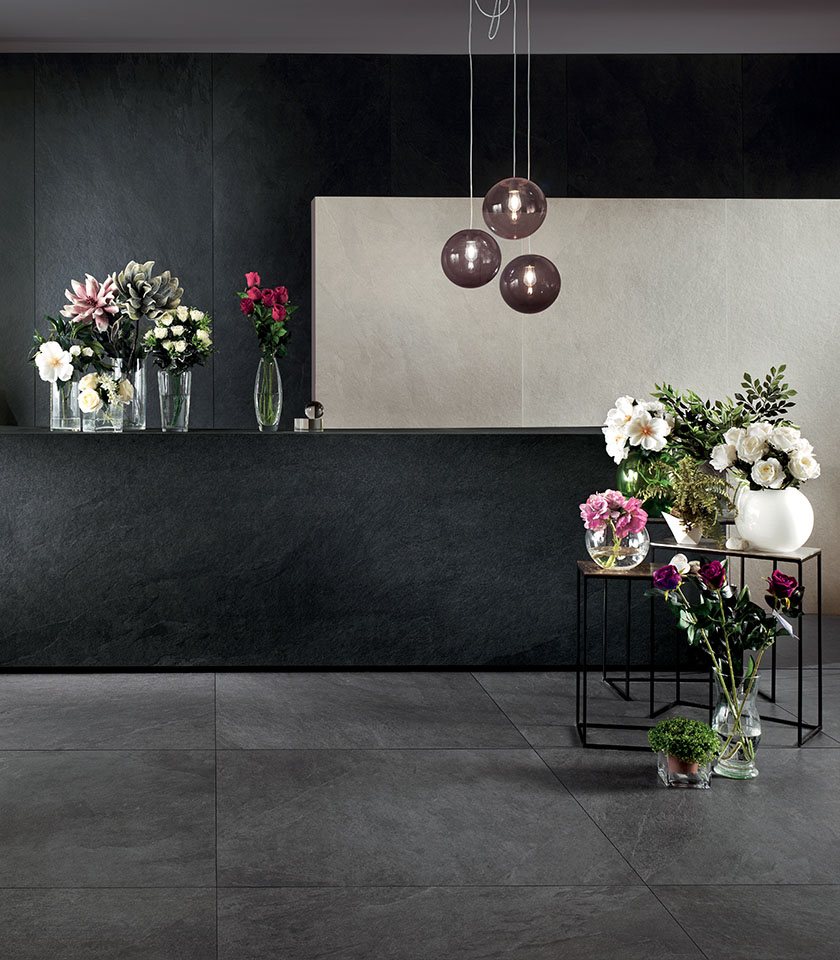
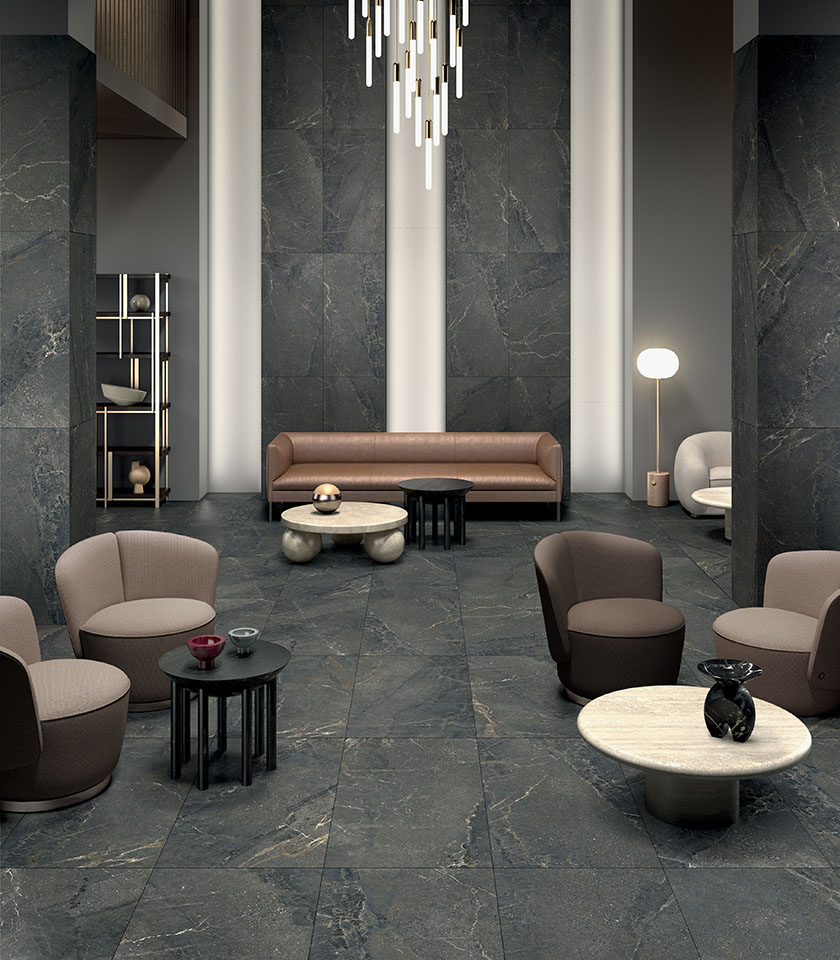
Alongside, Anthology explores a more compact, solid materiality, capable of creating enveloping and sophisticated atmospheres. Its surfaces evoke an ancient memory, reinterpreted with contemporary sensibility.
These are spaces that do not seek lightness, but presence.
Environments in which material becomes experience.
Light as balance
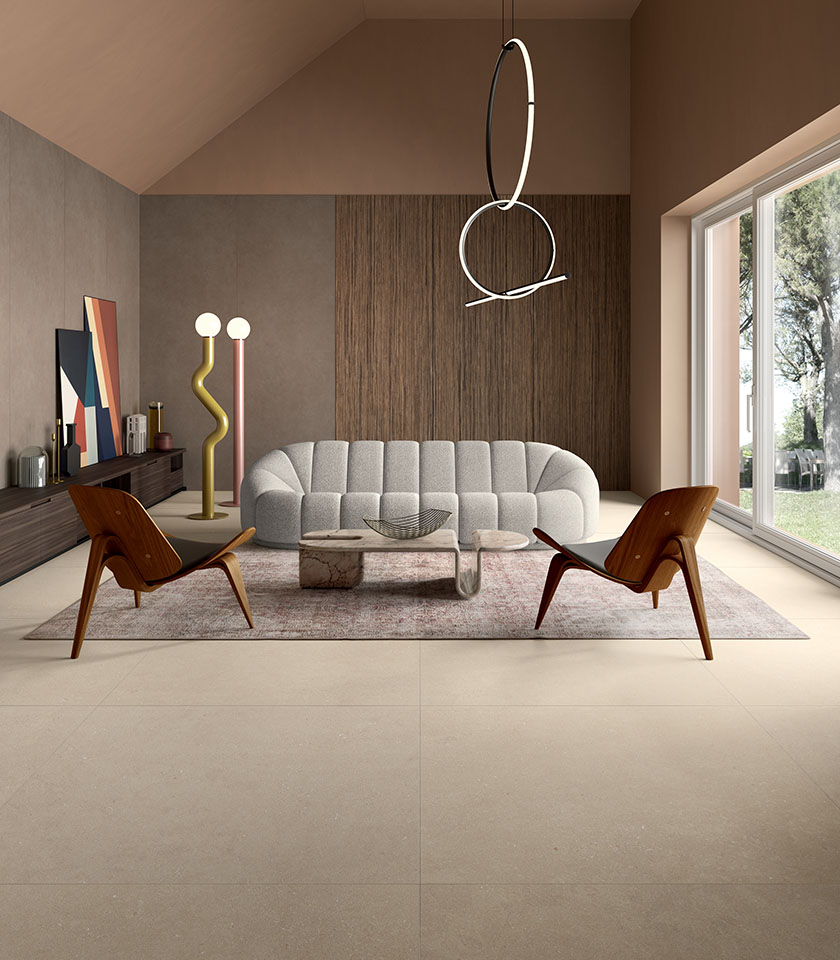
On the opposite end, contemporary design increasingly seeks a luminous dimension, capable of lightening and amplifying space.
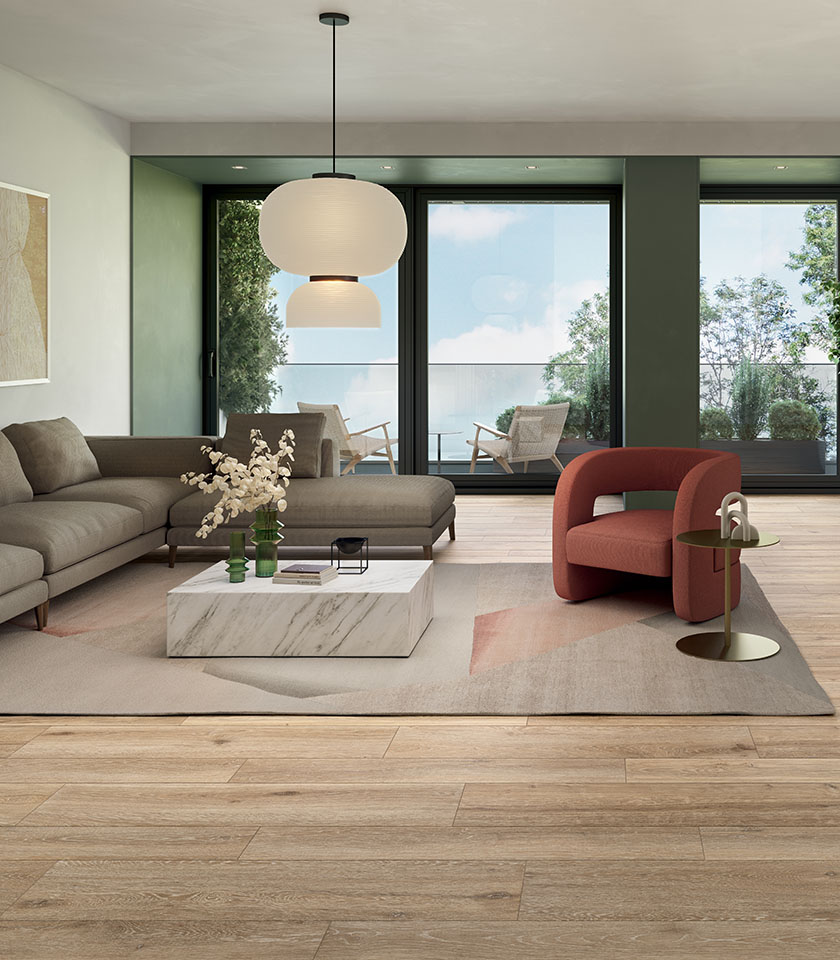
This is where lighter surfaces emerge, traversed by a controlled materiality and a subtle vibration. Bio Attitude, with its warm and natural tones such as Almond, introduces the language of wood in a contemporary key, capable of dialoguing with light and creating welcoming environments.
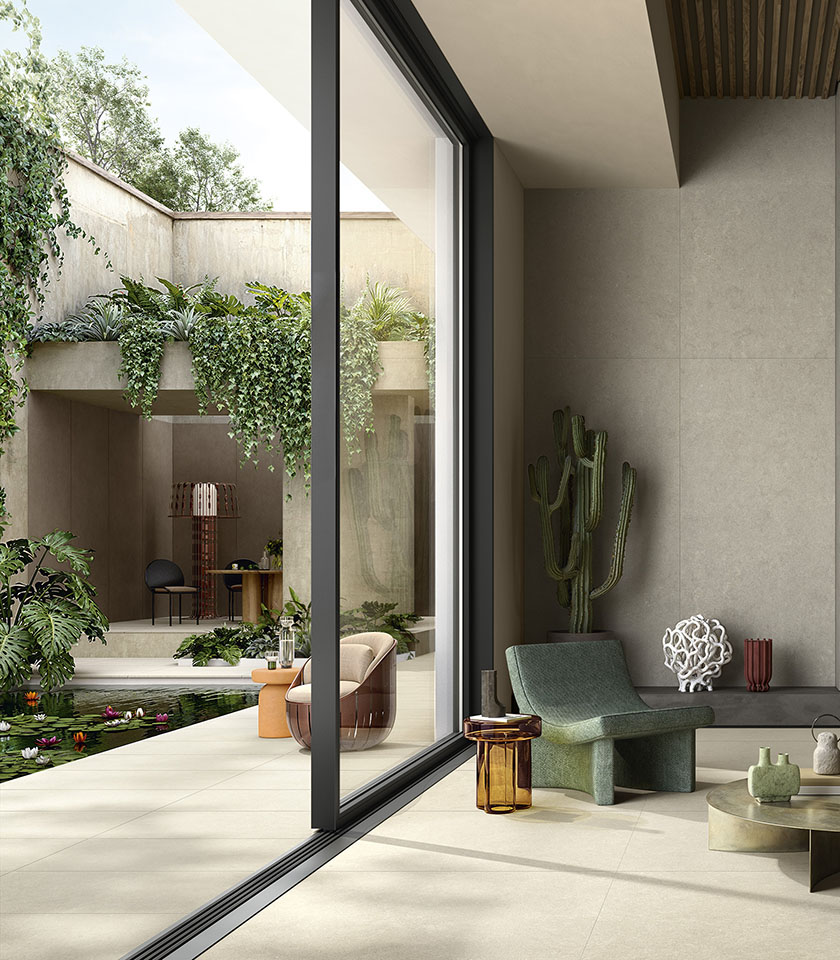
Moving in the same direction, Intense interprets stone with a more balanced sensibility. Its surfaces, luminous yet never cold, convey depth without weighing down the space, building environments where elegance and naturalness coexist.
Here the design breathes.
It opens up, finds balance, discovers its measure.
Pulse: dualism as a design language
The dialogue between opposites is not merely a compositional principle: it can become the very material of design.
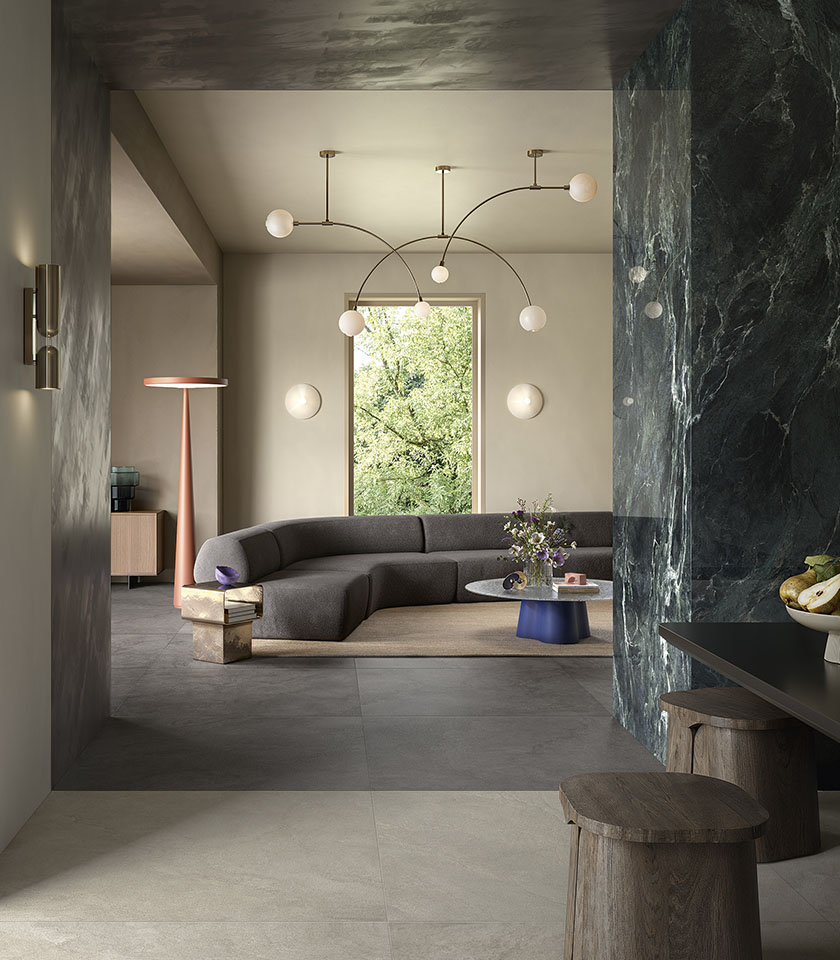
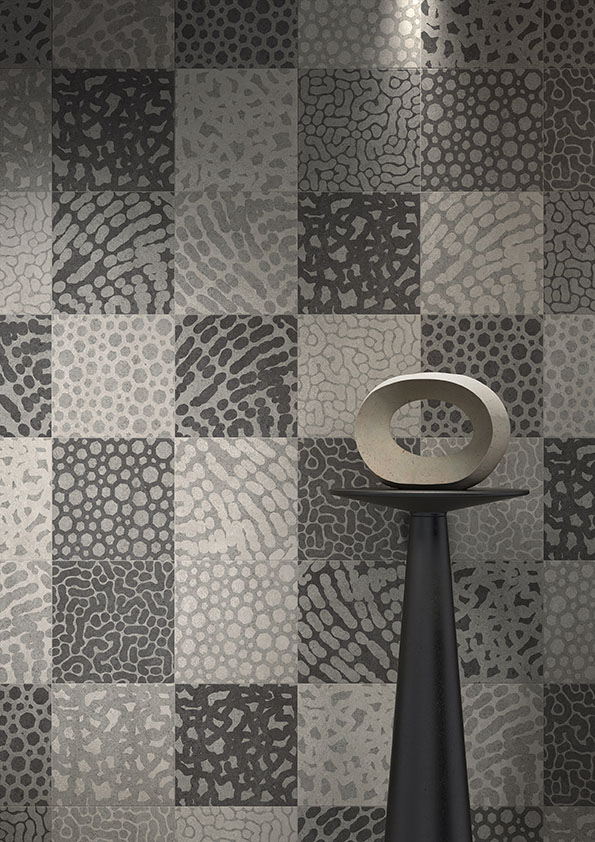
This is the case with Pulse, unveiled in preview at Cersaie 2025. A surface born precisely to move between different registers, without belonging to any single one.
Its lighter tones expand the space, making it airy. The deeper ones structure it, define its rhythm. Pulse does not impose a direction, but accompanies the design, allowing ever-different relationships between material and light to be built.
It is a surface that interprets the present: fluid, layered, open to cross-contamination.
Designing between opposites
As in the pages of Wuthering Heights, in contemporary design too it is opposites that generate emotion.
It is not about choosing between strength and lightness, between shadow and light, but about bringing them into relation. The design becomes a narrative made of calibrated contrasts, dynamic balances, tensions that do not resolve, but transform.
Ceramic surfaces take an active part in this narrative. They define the space, build its identity, amplify its expressive possibilities.
And it is precisely in this tension — never static, always alive — that contemporary living finds its most authentic form.
Because, today more than ever, it is not perfect harmony that defines a space, but the ability to hold together what seems irreconcilable — transforming contrast into style, and style into identity.
By subscribing to the newsletter, you will receive exclusive promotions dedicated to you.